Chronic Pain
When pain becomes your normal, it is time to find out why. Whether it is aching joints, headaches that steal your afternoons, back pain that limits movement, or nerve pain that burns through your hands and feet, we do not just manage your pain. We find what is driving it.

When "Learn to Manage It" Is Not Good Enough
You have been told the pain is just something you will have to live with. That the best you can hope for is managing symptoms day to day. That another prescription, another round of physical therapy, or a surgical consult is the next step. That is not good enough.
Pain that has not responded to conventional care usually has drivers conventional care is not evaluating. Inflammation that is not showing on standard bloodwork. Hormonal shifts that intensify joint and muscle sensitivity. Nutrient deficiencies that compromise nerve function. Structural issues that have never been assessed alongside systemic ones. Our job is to find the drivers and address them.
Nearly three decades of integrative practice and a multidisciplinary clinical team of medical doctors, naturopathic physicians, nurse practitioners, chiropractors, and specialists stand behind every pain care plan.
Understanding the Condition
Why Your Pain Has Not Gone Away
Pain Is a Signal, Not a Diagnosis
Pain is the nervous system's alarm. It tells you that something in the body needs attention. When the alarm keeps ringing for months or years, the answer is not to disable the alarm. The answer is to find what is triggering it.
Conventional care often treats chronic pain as the problem itself. Medications quiet the signal, injections suppress the inflammation, surgery addresses the structure. Each of those has a role, and we coordinate with physicians who provide them. None of them investigates why the body is producing the pain in the first place.
Root Causes That Standard Care Rarely Evaluates
- Systemic inflammation. Chronic inflammation drives joint pain, headaches, and neuropathy. Much of it originates in the gut. The old adage that joint pain starts in the gut is more accurate than most doctors realize, because gut inflammation produces the inflammatory cytokines that circulate and sensitize tissue far from the digestive tract.
- Hormonal imbalance. Estrogen, progesterone, testosterone, cortisol, and thyroid hormones all modulate pain perception and tissue health. Perimenopause, thyroid dysfunction, and adrenal fatigue each produce measurable changes in how the body experiences and recovers from pain.
- Nutritional deficiencies. Magnesium, B vitamins, vitamin D, omega-3 fatty acids, and specific amino acids are load-bearing for nerve function and muscle recovery. Deficiencies show up clinically as cramping, nerve pain, joint stiffness, and slow tissue repair.
- Neuropathic dysfunction. Nerve pain arises from blood sugar dysregulation, toxic exposures, spinal or structural compression, autoimmune activity, and circulation problems. Gabapentin manages the symptom. It does not address any of the drivers.
- Structural and mechanical issues. Spinal alignment, joint wear, scar tissue, and muscle imbalances contribute to pain, especially when compounded by systemic drivers. Structural care is most effective when it is paired with systemic work.
- Toxic burden. Heavy metals (mercury, lead, arsenic) and mold mycotoxins produce inflammation and nerve irritation that conventional workups rarely screen for.
Chronic Pain Rarely Travels Alone
Chronic pain patients commonly also carry chronic fatigue, depression, autoimmune conditions, thyroid dysfunction, and hormonal imbalance. Treating pain in isolation leaves the other drivers in place. Treating the whole picture is why the same root-cause evaluation often surfaces answers to problems the patient did not come in asking about.
Test First. Treat Second.
Pain that has persisted for months or years almost always has measurable drivers. Standard workups often do not look for them. Our evaluation orders the testing that pain patients actually need.
Your initial consultation covers a full history review, targeted diagnostic planning, and a personalized starting protocol.
- Inflammatory markers CRP, ESR, homocysteine, and specialized inflammatory panels.
- Food sensitivity testing IgG and IgE panels.
- Full hormone panel Estrogen, progesterone, testosterone, cortisol rhythm, and full thyroid with antibodies.
- Heavy metal and toxin panels Mercury, lead, arsenic, and mold mycotoxins.
- Nutritional status Magnesium, B complex, vitamin D, omega-3, and amino acids.
- Nerve function assessment For suspected neuropathy.
- Spinal and joint structural evaluation Alignment, joint wear, and mechanical contributors.
Pain Conditions We Treat
Conditions We Commonly See
Pain shows up in many forms. Our approach adapts to each one. Find your condition below for how we evaluate and treat it.
Arthritis
More than 50 million Americans live with some form of arthritis, and it remains the leading cause of disability in the country. Osteoarthritis develops as the cartilage that cushions joints wears down, exposing bone and producing the stiffness, swelling, and pain most patients associate with aging. Rheumatoid arthritis is a different mechanism entirely: an autoimmune condition where the immune system attacks the joint lining, driving inflammation and joint damage from the inside.
Conventional arthritis care usually starts and stops with anti-inflammatories and, for rheumatoid arthritis, immunosuppressive drugs. Our approach investigates the drivers behind the joint degeneration or immune activation: food sensitivities, chronic inflammation, nutrient deficiencies, and hormonal contributors that show up in the patients we evaluate.
Therapies commonly used: Joint Therapy, Ozone / Prolozone, Regenerative Medicine, Advanced Diagnostic Testing.
Joint Pain
Joint pain often originates somewhere else entirely. The most common origin is the gut. Reactions and infections in the gastrointestinal tract create the inflammatory conditions that sensitize and irritate joints across the body, which is why imaging of the joint itself often looks unremarkable even when the pain is severe.
Our evaluation looks at the gut-joint connection first when joint pain is not explained by clear structural damage: food sensitivity testing, gut permeability markers, and inflammatory panels. When the structural picture is the driver, prolozone, regenerative medicine, and chiropractic care are the specific tools.
Therapies commonly used: Joint Therapy, Ozone / Prolozone, Chiropractic Care, Detoxification.
Back Pain
Up to 80 percent of adults experience significant back pain at some point. Most care plans start and stop with pain medication, muscle relaxants, and physical therapy. Many of the patients we see have cycled through all of that and still hurt.
Our approach looks at inflammation, hormonal contributors, and structural alignment together. Spinal alignment issues radiate pain into the back, legs, and hips. Chiropractic care and spinal decompression address the structural component directly. Prolozone injections are used specifically for low back pain to reduce inflammation and support tissue repair. NAD+ IV is used for nerve regeneration and as a support tool for patients working to reduce painkiller reliance. Hyperbaric oxygen with PEMF supports tissue repair for chronic low back pain that has not resolved with standard care.
Therapies commonly used: Chiropractic Care, Ozone / Prolozone, Hyperbaric Oxygen, IV Therapy.
Headaches and Migraines
Each headache patient has a unique trigger profile. Treating the headache without identifying the trigger is why so many migraine patients cycle through medications without lasting relief. Our evaluation looks at five root-cause categories:
Gut dysfunction, where inflammation driven by food sensitivities or leaky gut produces neurotransmitter imbalances that manifest as headaches. Hormonal imbalances, where thyroid, sex hormones, or cortisol dysregulation trigger cyclical or chronic head pain. Dehydration and nutritional drivers, including magnesium deficiency, which is often overlooked. Chronic stress and adrenal dysfunction, which shift pain threshold and sleep patterns. Cervical spine and structural issues, where alignment problems radiate pain upward.
Therapies commonly used: Advanced Diagnostic Testing, Hormone Therapy, IV Therapy, Chiropractic Care.
Neuropathy
If you are living with burning, tingling, numbness, or shooting pain, you already know how much neuropathy can affect sleep, walking, and daily activity. Conventional neuropathy care usually stops at "manage blood sugar and take gabapentin." That leaves most of the drivers unaddressed.
Our neuropathy evaluation investigates eight common drivers: blood sugar dysregulation, nutrient deficiencies (especially B12 and alpha-lipoic acid), thyroid imbalance, chronic inflammation, autoimmune activity, toxin exposure, spine or nerve compression, and poor circulation. The care plan addresses the drivers identified in your testing: circulation and inflammation support, targeted nutrient repletion, and in some cases regenerative and advanced therapies to support tissue repair.
Therapies commonly used: Advanced Diagnostic Testing, IV Therapy, Hyperbaric Oxygen, Regenerative Medicine.
Fibromyalgia
Fibromyalgia syndrome affects more than 10 million Americans, predominantly women, and is characterized by long-term widespread pain and tenderness in joints, muscles, tendons, and soft tissues. Patients also commonly experience cognitive difficulties (forgetfulness, trouble concentrating), frequent sleep problems, irritable bowel syndrome, and a wide range of somatic complaints. Fibromyalgia is a pain condition and a chronic fatigue condition, and we often evaluate both together.
Most fibromyalgia care is built around medication because the causes are poorly understood in conventional medicine. Our evaluation looks at the contributors research has identified: neurotransmitter imbalances, mitochondrial dysfunction, pain hypersensitivity, toxicity, infections, hormonal imbalance, and nutritional deficiencies. We also rule out conditions that are commonly misdiagnosed as fibromyalgia, including hypothyroidism, Lyme disease, and severe vitamin D deficiency.
Therapies commonly used: Advanced Diagnostic Testing, IV Therapy, Hormone Therapy, Infrared Sauna.
Your Path to Relief
Comprehensive Evaluation
Full medical history, pain mapping, treatment history, and prior imaging review. The timeline of when pain started, what has and has not worked, and what else is happening in the body informs every testing decision.
Root-Cause Identification
Targeted testing based on your presentation. Inflammatory markers, food sensitivities, hormonal panels, heavy metal and toxin burden, nutritional status, and structural assessment. We order what the picture calls for, not a generic packet.
Personalized Treatment Plan
Your plan is built from what the testing reveals. Prolozone and regenerative joint therapies, chiropractic and spinal decompression, IV nutrient support, hormone optimization, gut healing protocols, detoxification, hyperbaric oxygen, infrared sauna, and targeted supplementation. Coordination with your current pain management physician is built into every plan.
Ongoing Monitoring
Re-testing at defined intervals, protocol adjustments as markers improve, and structural follow-up. The goal is not lifelong pain management. The goal is restoring your body's ability to heal.
Therapies Used in Our Pain Programs
Your pain treatment protocol is personalized based on your diagnostic results and the condition we are treating. Therapies commonly used in our pain programs include:
Chiropractic Care
Spinal alignment, joint adjustment, and spinal decompression. Core modality for back pain, neck pain, and structural contributors to headache and joint pain.
Learn moreOzone / Prolozone Therapy
Prolozone injections for joint pain, low back pain, and arthritis. Oxidative therapy for inflammation reduction.
Learn moreAdvanced Diagnostic Testing
Inflammatory markers, food sensitivity panels, hormonal panels, heavy metal and mold exposure, nerve function assessment.
Learn moreHormone Therapy (BHRT)
Bioidentical hormone balance for pain modulation, migraine reduction, and fibromyalgia-related hormone dysregulation.
Learn moreIV Therapy (NAD+ featured)
NAD+ for nerve regeneration and painkiller-reduction support. Nutrient IVs for inflammation reduction and magnesium repletion.
Learn moreHyperbaric Oxygen (with PEMF)
Pressurized oxygen with PEMF for chronic pain, tissue repair, and neuropathy support.
Learn moreRegenerative Medicine
Tissue repair, joint regeneration, and nerve repair support for pain that has not responded to standard care.
Learn moreDetoxification
Liver detox, heavy metal elimination, and toxin removal for pain patients with measurable toxic burden.
Learn moreBiofeedback / Brain Mapping
QEEG brain mapping and neurofeedback for chronic pain patterns.
Learn moreInfrared Sauna
Anti-inflammatory support for joint pain, fibromyalgia, and muscle recovery.
Learn moreWeight Loss
Weight management as part of pain reduction, especially for joint pain, back pain, and fibromyalgia where load and inflammation both contribute.
Learn moreJoint Therapy
Non-surgical joint therapy for arthritis, osteoarthritis, and chronic joint pain.
Learn moreStandard Pain Management vs. Root-Cause Treatment
Both approaches have a role. Here is what root-cause pain care adds.
Standard Pain Management
- Imaging and symptom description drive the diagnosis
- Anti-inflammatories, muscle relaxants, and opioids are first-line
- Inflammatory markers and food sensitivities are not routinely tested
- Hormonal and nutritional contributors are not evaluated
- Cortisone injections for temporary relief
- "Learn to manage it" as the long-term plan
- Surgery when medications stop working
- Single-provider care (orthopedist, neurologist, or pain clinic)
PMC Root-Cause Approach
- Comprehensive diagnostic testing before treatment direction is set
- Inflammatory and food sensitivity panels routinely included
- Full hormone panel integrated into the evaluation
- Heavy metal and toxin screening when indicated
- Nutritional status (magnesium, B vitamins, vitamin D, omega-3, amino acids)
- Structural and systemic drivers evaluated simultaneously
- Regenerative, prolozone, hyperbaric oxygen, and IV therapies available
- Treatment plan tied to your specific drivers, not a pain-scale number
- Multi-disciplinary clinical team coordinating across systems
More Than Pain Management
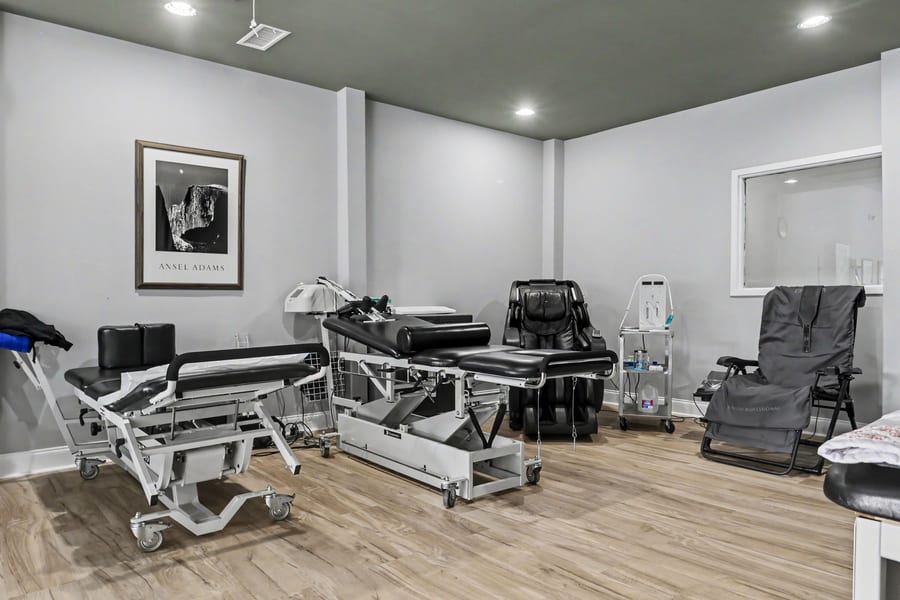
We have built what we believe to be the most comprehensive non-surgical pain center in the Southeast. That is not a marketing claim. It is a reflection of the breadth of therapies under one roof: chiropractic, regenerative, prolozone, IV, hyperbaric oxygen, infrared sauna, hormone therapy, diagnostic testing, and detoxification all coordinated by a single clinical team.
Many of our pain patients arrive after cycling through orthopedists, neurologists, and pain clinics. What they have not had is a provider looking at all the drivers at once. That is what we do.
Related Conditions We Treat
Chronic pain rarely travels alone. These are conditions we commonly evaluate and treat alongside it.
Chronic Pain FAQ
What types of chronic pain do you treat?
We treat the full spectrum of chronic pain conditions including arthritis, general joint pain, back pain, headaches and migraines, neuropathy, fibromyalgia, musculoskeletal pain, and complex multi-system pain presentations. Each condition has its own evaluation and treatment direction described in the Conditions We Commonly See section above.
Why hasn't physical therapy or medication fixed my pain?
Because the drivers of your pain may not be structural or medication-responsive. Chronic inflammation, hormonal imbalance, nutrient deficiency, toxic burden, autoimmune activity, and neuropathic dysfunction each produce pain that physical therapy and anti-inflammatories cannot fix, because those therapies do not address the underlying cause. Our evaluation is designed to identify which systemic drivers are present in your specific case.
Do you treat neuropathy?
Yes. Our neuropathy care goes beyond "manage blood sugar and take gabapentin." We investigate eight common drivers (blood sugar dysregulation, nutrient deficiencies, thyroid imbalance, chronic inflammation, autoimmune activity, toxin exposure, spine or nerve compression, poor circulation) and build a care plan around the drivers identified in your testing. Therapies may include NAD+ IV, hyperbaric oxygen with PEMF, alpha-lipoic acid, and in some cases regenerative and advanced therapies for tissue repair support.
Can fibromyalgia be treated naturally?
For many patients, yes. Our approach investigates the contributors that research has identified: neurotransmitter imbalances, mitochondrial dysfunction, pain hypersensitivity, toxicity, infections, hormonal imbalance, and nutritional deficiencies. Medication is not ruled out, but it is not the automatic starting point. We also rule out conditions that are commonly misdiagnosed as fibromyalgia, including hypothyroidism, Lyme disease, and vitamin D deficiency.
Do you work with my existing pain management doctor?
Yes. Our role is integrative, not a replacement for your current care team. We coordinate with orthopedists, neurologists, pain management specialists, and rheumatologists. Many of our patients continue their current treatments while we address systemic drivers alongside. Our goal is to reduce your overall medication burden and your dependence on symptom-suppression tools as the underlying drivers are addressed.
How long does treatment take to show results?
Most patients notice some improvement in the first weeks once the initial protocol is in place, particularly when inflammation, nutritional deficiencies, or hormonal drivers are the main contributors. More complex presentations, including fibromyalgia and long-standing neuropathy, typically take 8 to 12 weeks to show measurable change. Structural improvements through chiropractic and regenerative care also follow their own tissue-repair timeline.
How much does the first consultation cost?
Initial consultation pricing and financing options are detailed on our Insurance and Financing page. We are out-of-network with insurance but provide superbills for reimbursement, and we work with Cherry Financing and CareCredit.
Do I need a referral?
No referral is needed to schedule a chronic pain consultation. Call (770) 676-6000 or request an appointment online. A care coordinator will follow up within one business day.
Stop Managing. Start Healing.
Schedule a consultation and find out what root-cause medicine can do for you. No referral needed.