Joint Therapy
Non-surgical regenerative treatments that work with your body's natural healing capacity to repair damaged tissue, restore mobility, and relieve chronic pain without surgery.

Repair and Regenerate Instead of Replace
Over a million joint replacement surgeries are performed each year in the United States. Most patients arrive at surgery after a familiar chain of painkillers, physical therapy, lubricating injections, and cortisone. Those treatments can mask symptoms or slow degeneration, but they do not heal the joint itself.
Joint therapy at PMC uses naturally occurring growth chemicals in your body that program cells to produce specialized tissue, ligament, tendon, and cartilage. Healing cells are activated and directed to the injured area so the joint itself can rebuild, not just quiet down.
The treatment is non-surgical with minimal downtime. Most patients are able to return to normal activity after the procedure with a short period of reduced load on the treated joint.
See how it works at Progressive Medical Center.

Why Conventional Treatments Fall Short
Joint pain comes from injury, overuse, and degenerative conditions like arthritis. Cartilage wears down, inflammation sets in, and range of motion narrows. Pain medications and physical therapy may provide temporary relief, but they do not address the underlying damage.
Regenerative joint therapy changes the equation. The goal is not to mask pain but to restore the joint's structural integrity so your body does less work fighting an injury it cannot resolve on its own.
Your provider designs the plan around your specific condition. Diagnostic imaging and lab work are used to understand what is driving the pain, not just where it is. See Diagnostic Testing for the workup that precedes joint therapy. This is not a cortisone shot in an orthopedic waiting room. It is a comprehensive regenerative program.
Targeted Relief for Every Major Joint
Knee Pain
- Osteoarthritis of the knee
- Avascular necrosis
- Meniscus, ACL, and MCL tears
- Runner's knee
- Chronic knee pain
- Limited range of motion
Shoulder Pain
- Rotator cuff tendonitis
- Rotator cuff tears
- Shoulder arthritis
- Shoulder bursitis
Hip Pain
- Osteoarthritis of the hip
- Osteonecrosis of the hip
- Hip bursitis
- Hip pain and instability
- Difficulty walking or rising from a seated position
Back Pain
- Bulging or herniated lumbar discs
- Low back pain
- Buttock and leg pain
- Numbness and tingling in legs or feet
Ankle Pain
- Pain from cartilage loss
- Tendon tears
- Overstretched ligaments
- Sports-related ankle injuries
Hand and Wrist Pain
- Thumb arthritis (basal joint arthritis)
- Hand joint degeneration
- Wrist pain and instability
Advantages Over Conventional Treatment
Non-Surgical Alternative
Avoid replacement surgery, long recovery, and the risks that come with invasive procedures.
Actual Tissue Repair
Unlike pain medications or cortisone, which mask symptoms, joint therapy activates your body's own repair mechanisms. Structural improvement, not just pain management.
Minimal Downtime
No extended hospital stay, no general anesthesia, no months-long rehab. Same-day discharge for most patients.
Restore Mobility
Regenerative therapy reverses decline by rebuilding structural integrity, which means range of motion often continues to improve over the months following treatment.
Reduce Medication Dependence
Addresses the cause rather than the signal. Avoids the GI damage and dependency risks that come with long-term pain medication.
Long-Term Results
Benefits compound over time as healing progresses, rather than wearing off like a cortisone injection.
Conditions We Treat With Joint Therapy
What to Expect
Joint therapy at PMC is a full program, not a single injection. Here is how it works from first visit through progress monitoring.
Diagnostic Evaluation
Your journey begins with a comprehensive consultation and advanced diagnostic assessment. Imaging, lab work, and functional evaluation determine which regenerative approach is right for your condition.
Treatment Planning
Your provider builds a plan that may include direct injection therapies, prolozone treatments, nutritional support, and hyperbaric oxygen to support post-procedure recovery.
Treatment and Recovery
Minimally invasive procedure with no general anesthesia. Most patients return to normal activity the same day, with a short period of reduced activity for the treated joint.
Progress Monitoring
Healing is gradual. Results develop over weeks and months, and many patients experience continued improvement for 3 to 6 months after their procedure as the treated tissue continues to rebuild.
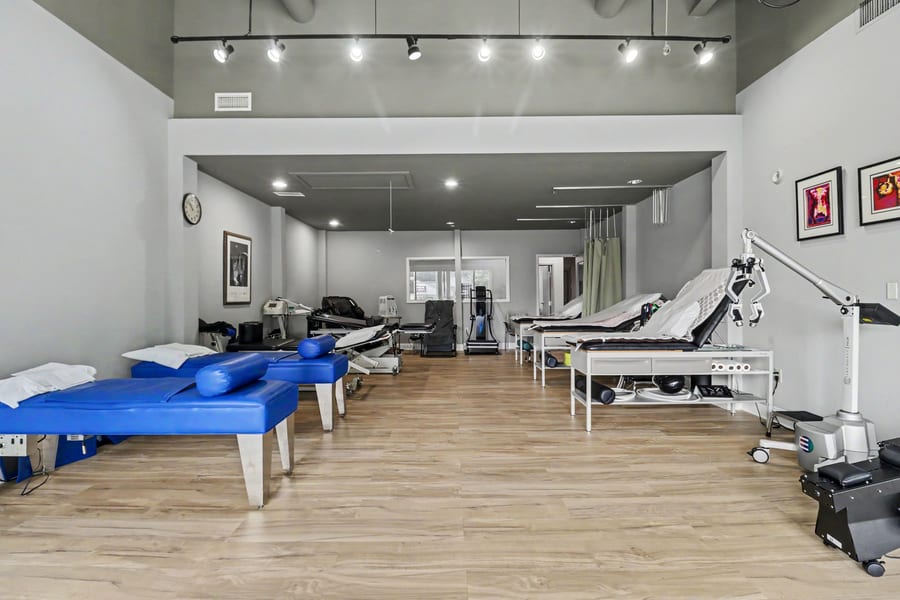
Joint Therapy Inside an Integrative Medical Center
Most joint pain clinics focus on a single modality: injections, medications, or surgery. When the patient's condition involves more than a structural problem, the options run out fast.
PMC's full medical team works across disciplines. Comprehensive lab work identifies inflammatory markers, hormonal imbalances, and nutritional deficiencies that accelerate joint degeneration. Complementary therapies are delivered on-site: prolozone injections, hyperbaric oxygen, and IV nutrient therapy.
Nearly three decades of integrative practice behind every treatment plan. Joint therapy here is not an isolated procedure; it is one piece of a broader program built around whole-body healing.
Regenerative Joint Therapy vs. Conventional Treatment
Conventional approaches manage joint pain. Regenerative therapy works to heal the joint itself.
Conventional Joint Treatment
- Pain medications that mask symptoms
- Cortisone injections that provide temporary relief
- Physical therapy alone without addressing tissue damage
- Eventual recommendation for joint replacement surgery
- No coordination with broader health conditions
- Single-modality approach within one specialty
Joint Therapy at PMC
- Regenerative treatments that activate the body's own tissue repair
- Advanced diagnostics to identify root causes of degeneration
- Complementary therapies (prolozone, HBOT, IV) to optimize healing
- Non-surgical approach with minimal downtime
- Whole-person care that addresses inflammation, nutrition, and hormones
- Full integrative team across multiple medical disciplines under one roof
Therapies That Support Joint Healing
Ozone / Prolozone Therapy
One of the primary regenerative injection therapies used for joint conditions at PMC.
Learn moreRegenerative Medicine
Broader regenerative program beyond joint-specific therapy. Covers direct clinical terminology and additional applications beyond orthopedics.
Learn moreDiagnostic Testing
Inflammatory markers, hormonal imbalances, and nutritional deficiencies that accelerate joint degeneration.
Learn moreJoint Therapy FAQ
What is joint therapy at PMC?
Joint therapy at PMC is a non-surgical regenerative treatment that uses your body's own healing mechanisms to repair damaged tissue. The treatment activates naturally occurring growth chemicals that program cells to produce specialized tissue, ligament, tendon, and cartilage. The result is tissue repair, not symptom masking.
Can joint therapy help me avoid joint replacement surgery?
Many patients come to us specifically to explore alternatives to surgery. Joint therapy uses your body's own healing mechanisms to repair damaged tissue, cartilage, and ligaments. While results vary by condition and severity, many patients experience significant pain relief and improved mobility without surgical intervention. Your provider will assess your condition and help you understand your options.
Is the treatment painful?
Discomfort is minimal. No general anesthesia is used. Most patients describe mild pressure or a brief sensation at the treatment site during the procedure itself. Post-procedure soreness typically resolves within a few days.
Is this different from cortisone injections?
Yes. Cortisone injections reduce inflammation temporarily but do not repair the underlying damage, which is why they tend to stop working over time. Joint therapy works to regenerate the damaged tissue itself. Many patients come to us after cortisone shots stopped providing relief, looking for a treatment that addresses the root cause rather than masking symptoms.
How many sessions will I need and when will I see results?
The number of treatments depends on the severity of your condition and which joints are affected. Some patients experience significant improvement after a single treatment, while others benefit from a series of sessions spaced over several weeks or months. Initial improvement is often noticeable within 2 to 4 weeks; fuller benefit typically develops over 6 to 12 weeks, with continued improvement for 3 to 6 months after the procedure.
What's the difference between joint therapy and regenerative medicine?
Joint therapy at PMC is a specific application of regenerative medicine focused on orthopedic conditions: knees, shoulders, hips, back, ankles, hands, and wrists. Our Regenerative Medicine page covers the broader science and additional applications beyond joints, including the direct clinical terminology that this page's language strategy does not use. If you are dealing with joint pain specifically, you are in the right place.
How much does joint therapy cost at PMC?
Fees depend on the joint being treated, the severity of your condition, and how many sessions are part of your plan. The front desk will walk you through consultation fees and treatment pricing during scheduling. PMC is out-of-network; superbills are provided for insurance reimbursement, and financing through Cherry and CareCredit is available. See Insurance and Financing for more detail.
What makes joint therapy at PMC different from other providers?
At most clinics, joint injections are a standalone procedure: you get the shot and go home. At PMC, joint therapy is delivered inside a multidisciplinary medical team. Your provider identifies systemic factors (inflammation, hormones, nutrient status) that affect how well you heal, and complementary therapies like prolozone, HBOT, and IV nutrient support are available without a referral to a different clinic.
Ready to Explore a Non-Surgical Path Forward?
Schedule a consultation to find out if regenerative joint therapy is right for your condition. No referral needed.