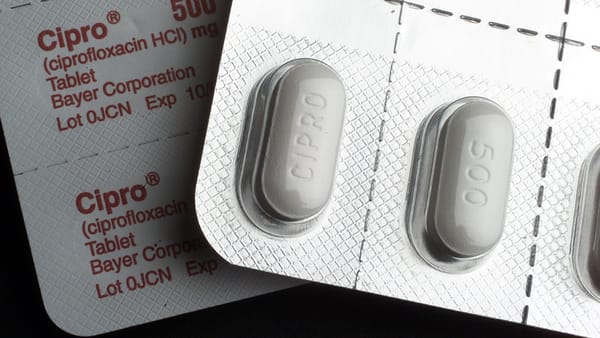
Fluoroquinolones are one of the most commonly prescribed classes of antibiotics and are very powerful medications. Unfortunately, these big guns have a track record of being prescribed as the first line of defense against a variety of routine infections instead of when the illness' outcome outweighs the risk of their use.
Most people recognize fluoroquinolone brand names like Cipro, Levaquin, Avelox, and Floxin, but some new to the class have recently entered the market. Among those that may not ring such a familiar bell include Xtoro and Quinsair.
The Antibiotic Reality
Antibiotics' goal is to destroy microorganisms, which includes both the good guys with the bad guys, and therefore, leads to side effects. Progressive Medical Center has a long, successful history working with patients with gut flora disruptions. What differentiates the fluoroquinolone class of antibiotics from others is its ability to cause severe adverse reactions that can not only disable patients, but even cause death. You can check out a list of patient-reported adverse reactions at the bottom of this page.
For some, reactions to fluoroquinolones can occur from as little as one pill. For others, reactions can occur weeks, months, or even longer after taking the drugs. A patient, and even medical professionals, may not suspect that these antibiotics are the cause because symptoms can often mimic other medical conditions.
Approximately half of the fluoroquinolones that were once on the market have now been removed from clinical practice due to their severe toxicities. Although FDA warnings and cautionary information exist, some doctors continue to prescribe this class of antibiotics for infections they were never intended to treat. As a result, many patients continue to unnecessarily suffer devastating disabilities.
Quinolone Vigilance Foundation
Headquartered in Charlotte, N.C., the Quinolone Vigilance Foundation (QVF) is a volunteer non-profit organization established in 2009 in response to countless victims worldwide who have suffered severe adverse reactions to fluoroquinolone antibiotics.
The foundation offers education for medical professionals and presses for more prudent prescription standards toward a reduction in global antibiotic resistance. QVF also maintains a funding arm for continued research into antibiotic toxicity. Progressive Medical Center has a strong relationship with the foundation, both in education and toxicity patients' care.
Fluoroquinolone Toxicity Treatment Protocol
For our out-of-town patients, Progressive Medical recommends a two-week treatment plan. The following information is provided to help our patients when making travel arrangements:
- A patient care specialist will schedule your first consultation with an MD, and then two subsequent visits with an ND and/or PA.
- You will also meet with a registered dietitian to discuss nutritional support specific to fluoroquinolone toxicity.
- Securing the following lab tests (within three months) can help with antioxidant therapy scheduling: a G6PD, CBC (to check for anemia), and Chemscreen (including liver enzymes such as AST, ALT, and Alkaline Phosphatase).
- On your first visit, your clinician will also assess you for other therapies including, but not limited to, acupuncture, pain-relieving therapies, upper cervical chiropractic care, and energetic modalities including the Biomat, Matrix, and PEMF. During your stay, you are also free to use our hyperbaric oxygen chambers and infrared saunas for the benefits of increased healing.
- Because fluoroquinolones destroy connective tissue, cardiovascular function, and gut health (microbiome), patients undergo the following tests to assess damage:
- Comprehensive Urine Screen
- Stool Test to assess disturbances in the microbiome (gut flora). Without reestablishing the microbiome, oxidative stress that caused the issue is likely to continue.
- Food Sensitivity Test: An anti-inflammatory diet reduces inflammation and oxidative stress on the system, increasing the ability to heal.
- Markers of oxidative stress: Glutathione, 8-OHdG, Lactic Acid to assess what made you vulnerable initially, and prevent it going forward. This gives our practitioners a better understanding of genetic predisposition.
Progressive Medical Center will adapt treatment programs for patients whose schedules cannot accommodate two weeks, but it is our experience that infusion therapy plays a critical role in establishing wellness. These procedures will also be scheduled before you arrive to ensure your appointment.
Symptoms of Fluoroquinolone Toxicity
- Tendinitis
- Tendon rupture
- Spinal disk degeneration
- Peripheral neuropathy
- Nerve pain
- Tremors
- Anxiety
- Insomnia
- Depression
- Seizures
- Persistent gastric issues
- Chemical and food sensitivities
- Retina tears
- Ringing in the ears
- Dysautonomia